This is default featured slide 1 title

Go to Blogger edit html and find these sentences.Now replace these sentences with your own descriptions.This theme is Bloggerized by Lasantha Bandara - Premiumbloggertemplates.com.

This is default featured slide 2 title

Go to Blogger edit html and find these sentences.Now replace these sentences with your own descriptions.This theme is Bloggerized by Lasantha Bandara - Premiumbloggertemplates.com.

This is default featured slide 3 title

Go to Blogger edit html and find these sentences.Now replace these sentences with your own descriptions.This theme is Bloggerized by Lasantha Bandara - Premiumbloggertemplates.com.

This is default featured slide 4 title

Go to Blogger edit html and find these sentences.Now replace these sentences with your own descriptions.This theme is Bloggerized by Lasantha Bandara - Premiumbloggertemplates.com.

This is default featured slide 5 title

Go to Blogger edit html and find these sentences.Now replace these sentences with your own descriptions.This theme is Bloggerized by Lasantha Bandara - Premiumbloggertemplates.com.

Selasa, 28 Mei 2013

Download Close to Shore: The Terrifying Shark Attacks of 1916, by Michael Capuzzo

Download Close to Shore: The Terrifying Shark Attacks of 1916, by Michael Capuzzo

Have you listened to that analysis can promote the mind to work well? Some people truly believe with that situation. Nonetheless, lots of people additionally include that it's not about analysis. It's about exactly what you can take the message and impact of the book that you read. Well, why can you think by doing this? Yet, we are sure that analysis by practice and wise can make the visitor read it quite possibly.

Close to Shore: The Terrifying Shark Attacks of 1916, by Michael Capuzzo

Close to Shore: The Terrifying Shark Attacks of 1916, by Michael Capuzzo


Close to Shore: The Terrifying Shark Attacks of 1916, by Michael Capuzzo


Download Close to Shore: The Terrifying Shark Attacks of 1916, by Michael Capuzzo

Schedule Close To Shore: The Terrifying Shark Attacks Of 1916, By Michael Capuzzo is one of the priceless well worth that will make you consistently abundant. It will not suggest as abundant as the cash offer you. When some people have absence to face the life, individuals with numerous e-books in some cases will certainly be smarter in doing the life. Why should be book Close To Shore: The Terrifying Shark Attacks Of 1916, By Michael Capuzzo It is in fact not indicated that e-book Close To Shore: The Terrifying Shark Attacks Of 1916, By Michael Capuzzo will certainly offer you power to get to every little thing. Guide is to review as well as just what we indicated is guide that is reviewed. You can likewise view just how the e-book qualifies Close To Shore: The Terrifying Shark Attacks Of 1916, By Michael Capuzzo and also numbers of e-book collections are providing right here.

Checking out, when even more, will offer you something new. Something that you do not recognize after that revealed to be well known with the publication Close To Shore: The Terrifying Shark Attacks Of 1916, By Michael Capuzzo notification. Some understanding or lesson that re obtained from reviewing e-books is vast. More books Close To Shore: The Terrifying Shark Attacks Of 1916, By Michael Capuzzo you read, even more knowledge you obtain, as well as much more chances to constantly enjoy reading publications. Due to the fact that of this factor, reading publication must be started from earlier. It is as just what you can obtain from the book Close To Shore: The Terrifying Shark Attacks Of 1916, By Michael Capuzzo

So, should you review it quickly? Obviously, yes! Must you read this Close To Shore: The Terrifying Shark Attacks Of 1916, By Michael Capuzzo as well as complete it fast? Never! You can get the satisfying analysis when you read this book while enjoying the extra time. Even you do not review the printed book as here, you can still hold your tablet computer and review it throughout. After obtaining the choice for you to obtain included in this type of versions, you can take some ways to review.

As well as why we recommend it to read in that leisure time? We know why we recommend it since it remains in soft file forms. So, you could wait in your gadget, also. And also you constantly bring the gadget wherever you are, do not you? To make sure that method, you are readily available to read this publication everywhere you can. Currently, let tae the Close To Shore: The Terrifying Shark Attacks Of 1916, By Michael Capuzzo as you're reading material and obtain simplest way to review.

Close to Shore: The Terrifying Shark Attacks of 1916, by Michael Capuzzo

Review

“A remarkable read . . . a flash photo of the moment when our fascination with sharks transformed from awe into mortal dread.”—Entertainment Weekly“The most perfect beach book ever. Better than Jaws–an amazing story, terrific writing, and the Gilded Age setting is fascinating. I loved it.”—Linda Marotta, Shakespeare & Company, New York City“Popular history meets popular science in this thrilling shark story. As in Seabiscuit, the author interweaves social history with a suspenseful story told from different characters’ points of view, including that most fascinating character of all: the shark itself.”—Arsen Kashkashian, Boulder Book Store, Boulder, Colorado“This riveting book skillfully combines historical fact with shark science and lore. A first-rate thriller that’s all the more spine-tingling because it really happened.”—Anne Edkins, Vroman’s Bookstore, Pasadena, California“A riveting account of the terrorizing shark attacks [of 1916]. Meticulously researched, it provides fascinating information about the history of the great white shark as well as a social commentary of America during World War I. Informative, entertaining, enthralling.”—Tova Beiser, Brown University Bookstore, Providence, Rhode Island

Read more

From the Inside Flap

Combining rich historical detail and a harrowing, pulse-pounding narrative, "Close to Shore brilliantly re-creates the summer of 1916, when a rogue Great White shark attacked swimmers along the New Jersey shore, triggering mass hysteria and launching the most extensive shark hunt in history. During the summer before the United States entered World War I, when ocean swimming was just becoming popular and luxurious Jersey Shore resorts were thriving as a chic playland for an opulent yet still innocent era's new leisure class, Americans were abruptly introduced to the terror of sharks. In July 1916 a lone Great White left its usual deep-ocean habitat and headed in the direction of the New Jersey shoreline. There, near the towns of Beach Haven and Spring Lake-and, incredibly, a farming community "eleven miles inland-the most ferocious and unpredictable of predators began a deadly rampage: the first shark attacks on swimmers in U.S. history. For Americans celebrating an astoundingly prosperous epoch much like our own, fueled by the wizardry of revolutionary inventions, the arrival of this violent predator symbolized the limits of mankind's power against nature. Interweaving a vivid portrait of the era and meticulously drawn characters with chilling accounts of the shark's five attacks and the frenzied hunt that ensued, Michael Capuzzo has created a nonfiction historical thriller with the texture of "Ragtime and the tension of "Jaws. From the unnerving inevitability of the first attack on the esteemed son of a prosperous Philadelphia physician to the spine-tingling moment when a farm boy swimming in Matawan Creek feels the sandpaper-like skin of the passing shark, "Close to Shoreis an undeniably gripping saga. Heightening the drama are stories of the resulting panic in the citizenry, press and politicians, and of colorful personalities such as Herman Oelrichs, a flamboyant millionaire who made a bet that a shark was no match for a man (and set out to prove it); Museum of Natural History ichthyologist John Treadwell Nichols, faced with the challenge of stopping a mythic sea creature about which little was known; and, most memorable, the rogue Great White itself moving through a world that couldn't conceive of either its destructive power or its moral right to destroy. Scrupulously researched and superbly written, "Close to Shore brings to life a breathtaking, pivotal moment in American history. Masterfully written and suffused with fascinating period detail and insights into the science and behavior of sharks," Close to Shore recounts a breathtaking, pivotal moment in American history with startling immediacy.

Read more

See all Editorial Reviews

Product details

Paperback: 317 pages

Publisher: Broadway Books; Reprint edition (May 21, 2002)

Language: English

ISBN-10: 9780767904148

ISBN-13: 978-0767904148

ASIN: 0767904141

Product Dimensions:

5.2 x 0.7 x 8 inches

Shipping Weight: 8.8 ounces (View shipping rates and policies)

Average Customer Review:

4.3 out of 5 stars

278 customer reviews

Amazon Best Sellers Rank:

#257,785 in Books (See Top 100 in Books)

Outstanding book. I bought this book months ago and just now finished it. I tend to read several at once, but when I got into this book it was hard to put it down. This was a very informative book not only about Great White Sharks, but of the times this story took place back in 1916. After reading, I want to travel to the East Coast and check out the actual sites where it happened. I had honestly never heard of the creek attacks in New Jersey. I do highly recommend this book to anyone that loves history.

Well written account of the 1916 shark attacks along the New Jersey shore which resulted in a number of deaths, no small degree of panic and a frantic bunch of inept amateur shark hunters. The Peter Benchley book 'Jaws' and later the movie with the same title were loosely based on this series of incidents. The movie script even referenced the 1916 attacks. While the real life shark was not nearly so large as the 25 footer in the movie, the true life events were, in a number of ways, even more incredible than those depicted in the movie including "we're gonna need a bigger boat" but excluding the eating of Robert Shaw. The book gives excellent insight into the incredible lack of knowledge in that time period regarding sharks and their behaviors.

The book--about a series of East Coast shark attacks that inspired the writing of JAWS-- held my interest and provided a glimpse into the social life of a period (early 20th century) that I didn't know much about. There were memorable real-life characters, plus some a few blood-in-the-water thrills.If you want to understand sharks in a way that goes deeper than headlines and more scientific than JAWS, this book will likely please you. It quotes a number of world-class sharp experts. And it treats sharks with respect.But ultimately I felt that "Close to Share" was a shaggy shark story. The climax was underwhelming. Perhaps this was because the author was determined to tell the truth. I admire him for taking that position. But somehow the earlier parts of the book created an expectation that there'd be a dramatic conclusion. And that expectation wasn't met.

This was an interesting, if not wonderful, book. It was more about American society in 1916 and the effects of the shark attacks on that society than it actually was about the shark itself. At a time when Europe was desperately fighting World War 1 and America was on the verge of joining the conflict, when a plague of polio was killing between ten and twenty people a day in New York City alone, the shark attacks managed to push all of the above off the front pages of newspapers and out of the mind of Americans. Sharks were the thought and fear of the day.For the skill with which Mr. Capuzzo captured the mind of America at a very specific time, I might have given the book four stars, but the book seemed to dwindle toward the end. The rogue shark killed a very small fraction of the number of people dying daily from polio and certainly an infinitesimal number when compared with the casualties of the on-going war. And of all of these dangers, sharks were avoidable. Yet all of at least Eastern America was in a panic about the sharks and all "manly" men within reach of a coast were out hunting and killing sharks. When the book described one of these hunts, I wasn't even certain that it was the rogue shark that had been killed until pages later. Perhaps Capuzzo's point was that the particular shark mattered less than the danger and excitement of the hunt, but the effect, at least for me, was anti-climactic. Perhaps Mr. Capuzzo treated his material this way on purpose, once again to shift his subject matter from the shark to the mind of America, but in doing so, he undermined much of the tension and suspense of the book as a whole.

Very interesting accounting of the incidents of 1916 presented within a detailed framework of the social, political cultural environment of the era. While there are definitely tense, thrilling sections in the book but if you are looking for a quick-read shark thriller, this is probably not for you. There were many times when I could smell, hear, visualize and almost feel what it was like at a given moment there on the Jersey coast in 1916, and I even got a glimpse into what the shark might have been experiencing.

"Close to Shore" is a detailed, scientific, sociological look at society in 1916 with the added bonus of the focus on reactions to shark attacks.Capuzzo gives us the history behind Benchley's "Jaws," as well as the habits/life cycle of sharks. For anyone interested in the science and biodiversity of the sea, the shark chapters are enough reason to buy the book. Add to those the state of American science in oceanography during the early 1900s, and we have more interesting ideas, including that people didn't believe sharks were dangerous to man until the 1916 attacks--at least in America along the Eastern shore.Another fascinating part of the book is the sociological commentary on the sport of swimming in the ocean. I knew that the Romantics prized swimming (Lord Byron swam the Dardenelles), but assumed everybody swam. The beach is a fundamental part of my family's traditions. Capuzzo takes us from the sheltered "bathing wagons" of modesty for women to the scandalous baring of ANKLES to the new swimming costumes that freed the arms along with sundry other comments on the role of journalism and sensationalism.This is an educational summer read as long as it doesn't give you a new phobia about SHARKS off the coast of all beaches.

Close to Shore: The Terrifying Shark Attacks of 1916, by Michael Capuzzo PDF
Close to Shore: The Terrifying Shark Attacks of 1916, by Michael Capuzzo EPub
Close to Shore: The Terrifying Shark Attacks of 1916, by Michael Capuzzo Doc
Close to Shore: The Terrifying Shark Attacks of 1916, by Michael Capuzzo iBooks
Close to Shore: The Terrifying Shark Attacks of 1916, by Michael Capuzzo rtf
Close to Shore: The Terrifying Shark Attacks of 1916, by Michael Capuzzo Mobipocket
Close to Shore: The Terrifying Shark Attacks of 1916, by Michael Capuzzo Kindle
Close to Shore: The Terrifying Shark Attacks of 1916, by Michael Capuzzo PDF

Close to Shore: The Terrifying Shark Attacks of 1916, by Michael Capuzzo PDF

Close to Shore: The Terrifying Shark Attacks of 1916, by Michael Capuzzo PDF

Rabu, 15 Mei 2013

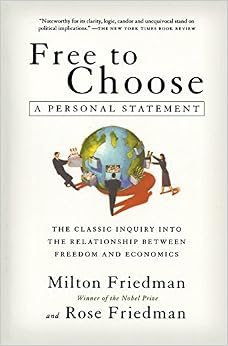
Free PDF Free to Choose: A Personal Statement, by Milton Friedman Rose Friedman

Free PDF Free to Choose: A Personal Statement, by Milton Friedman Rose Friedman

After couple of time, ultimately guide that we as well as you wait for is coming. So relieved to obtain this excellent book available to present in this internet site. This is guide, the DDD. If you still really feel so tough to get the printed publication in guide shop, you could join with us once more. If you have actually ever obtained guide in soft documents from this book, you can easily get it as the referral currently.

Free to Choose: A Personal Statement, by Milton Friedman Rose Friedman

Free to Choose: A Personal Statement, by Milton Friedman Rose Friedman


Free to Choose: A Personal Statement, by Milton Friedman Rose Friedman


Free PDF Free to Choose: A Personal Statement, by Milton Friedman Rose Friedman

New updated! The Free To Choose: A Personal Statement, By Milton Friedman Rose Friedman from the most effective writer and publisher is now offered right here. This is guide Free To Choose: A Personal Statement, By Milton Friedman Rose Friedman that will certainly make your day reading ends up being completed. When you are trying to find the printed book Free To Choose: A Personal Statement, By Milton Friedman Rose Friedman of this title in guide shop, you could not locate it. The issues can be the limited versions Free To Choose: A Personal Statement, By Milton Friedman Rose Friedman that are given up the book establishment.

When having free time, what should you do? Just sleeping or seatsing in the house? Full your downtime by analysis. Begin with currently, you time should be priceless. One to extend that can be reading product; this is it Free To Choose: A Personal Statement, By Milton Friedman Rose Friedman This book is supplied not only for being the product reading. You know, from seeing the title and also the name of writer, you should understand just how the quality of this book. Even the writer as well as title are not the one that makes a decision guide readies or not, you can compare t with the experience and understanding that the author has.

So, this is exactly what this book uses to you. You could take no notice of this info concerning Free To Choose: A Personal Statement, By Milton Friedman Rose Friedman Overlooking the advantages of this publication will certainly escort you to regret. Yeah, the benefits of reading this publication will be exact same with others. Improving the experience, understanding, and inspirations are the typical methods of you to read some books. However, the in addition, the benefits will be revealed from each book when reading and completing it.

After obtaining the soft data, you can easily create brand-new ideas in your mind. It is hard to get guide in your city, probably furthermore by seeing the shop. Going to the store will not also provide warranty to obtain the book? So, why don't you take Free To Choose: A Personal Statement, By Milton Friedman Rose Friedman in this website? Also that's only the soft data; you could really feel that the book will be so helpful for you and life around.

Free to Choose: A Personal Statement, by Milton Friedman Rose Friedman

From the Back Cover

In this classic about economics, freedom, and the relationship between the two, Milton and Rose Friedman explain how our freedom has been eroded and our prosperity undermined through the explosion of laws, regulations, agencies, and spending in Washington, and how good intentions often produce deplorable results when government is the middleman. The Friedmans also provide remedies for these ills--they tell us what to do in order to expand our freedom and promote prosperity.

Read more

About the Author

MILTON FRIEDMAN (1912–2006), Nobel laureate economist and former presidential adviser, was the author of a number of books, including Capitalism and Freedom and Tyranny of the Status Quo, also written with his wife, Rose Friedman (1910–2009).

Read more

Product details

Series: later printing

Paperback: 338 pages

Publisher: Mariner Books; LATER PRINTING. edition (November 26, 1990)

Language: English

ISBN-10: 9780156334600

ISBN-13: 978-0156334600

ASIN: 0156334607

Product Dimensions:

5.3 x 0.9 x 8 inches

Shipping Weight: 10.4 ounces (View shipping rates and policies)

Average Customer Review:

4.7 out of 5 stars

339 customer reviews

Amazon Best Sellers Rank:

#6,736 in Books (See Top 100 in Books)

35+ years old and still up-to-date. It is interesting to read older Economics books like "Free to Choose" to see how accurate they have been in predicting outcomes of policy. It is easy to write a book with hindsight as we often see today by "experts" blaming this or that well after the fact. Milton Freeman had incredible foresight. Not because he could predict the future but because he understood Economics so well that he could simply predict outcomes of policy based on an asymmetry of economic knowledge that very few other Economists, let alone policy-makers, have. I have read this book a couple of times over the years and enjoyed his PBS series by the same name, that first aired in 1980. Also a more up-to-date version by Swedish Historian Johan Norberg's "Free or Equal" - Free to Choose 30 years after.

Below are key excerpts from the book that I found particularly insightful:1- "Economic freedom is an essential requisite for political freedom. By enabling people to cooperate with one another without coercion or central direction, it reduces the area over which political power is exercised. In addition, by dispersing power, the free market provides an offset to whatever concentration of political power may arise. The combination of economic and political power in the same hands is a sure recipe for tyranny."2- "The experience of recent years--slowing growth and declining productivity--raises a doubt whether private ingenuity can continue to overcome the deadening effects of government control if we continue to grant ever more power to government, to authorize a "new class" of civil servants to spend ever larger fractions of our income supposedly on our behalf. Sooner or later--and perhaps sooner than many of us expect--an ever bigger government would destroy both the prosperity that we owe to the free market and the human freedom proclaimed so eloquently in the Declaration of Independence."3- "Prices perform three functions in organizing economic activity: first, they transmit information; second, they provide an incentive to adopt those methods of production that are least costly and thereby use available resources for the most highly valued purposes; third, they determine who gets how much of the product - the distribution of income. These three functions are closely interrelated."4- "Our society is what we make it. We can shape our institutions. Physical and human characteristics limit the alternatives available to us. But none prevents us, if we will, from building a society that relies primarily on voluntary cooperation to organize both economic and other activity, a society that preserves and expands human freedom, that keeps government in its place, keeping it our servant and not letting it become our master."5- "The ballot box produces conformity without unanimity; the marketplace, unanimity without conformity. That is why it is desirable to use the ballot box, so far as possible, only for those decisions where conformity is essential."6- "Freedom cannot be absolute. We do live in an interdependent society. Some restrictions on our freedom are necessary to avoid other, still worse, restrictions. However, we have gone far beyond that point. The urgent need today is to eliminate restrictions, not add to them."7- "In one respect the System has remained completely consistent throughout. It blames all problems on external influences beyond its control and takes credit for any and all favorable occurrences. It thereby continues to promote the myth that the private economy is unstable, while its behavior continues to document the reality that government is today the major source of economic instability."8- "The waste is distressing, but it is the least of the evils of the paternalistic programs that have grown to such massive size. Their major evil is their effect on the fabric of our society. They weaken the family; reduce the incentive to work, save, and innovate; reduce the accumulation of capital; and limit our freedom. . These are the fundamental standards by which they should be judged."9- "A society that puts equality--in the sense of equality of outcome--ahead of freedom will end up with neither equality nor freedom. The use of force to achieve equality will destroy freedom, and the force, introduced for good purposes, will end up in the hands of people who use it to promote their own interests...Freedom means diversity but also mobility. It preserves the opportunity for today's disadvantaged to become tomorrow's privileged and, in the process. enables almost everyone, from top to bottom, to enjoy a fuller and richer life."10- "We believe that the growing role that government has played in financing and administering schooling has led not only to enormous waste of taxpayers' money but also to a far poorer educational system than would have developed had voluntary cooperation continued to play a larger role...We have tried in this chapter to outline a number of constructive suggestions...These proposals are visionary but they are not impracticable...We shall not achieve them at once. But insofar as we make progress toward them--or alternative programs directed at the same objective--we can strengthen the foundations of our freedom and give fuller meaning to equality of educational opportunity."11- "Insofar as the government has information not generally available about the merits or demerits of the items we ingest or the activities we engage in, let it give us the information. But let it leave us free to choose what chances we want to take with our own lives."12- "When unions get higher wages for their members by restricting entry into an occupation, those higher wages are at the expense of other workers who find their opportunities reduced. When government pays its employees higher wages, those higher wages are at the expense of the taxpayer. But when workers get higher wages and better working conditions through the free market, when they get raises by firms competing with one another for the best workers, by workers competing with one another for the best jobs, those higher wages are at nobody's expense. They can only come from higher productivity, greater capital investment, more widely diffused skills."13- "Five simple truths embody most of what we know about inflation: 1. Inflation is a monetary phenomenon arising from a more rapid increase in the quantity of money than in output (though, of course, the reasons for the increase in money may be various) 2. In today's world government determines--or can determine -the quantity of money. 3. There is only one cure for inflation: a slower rate of increase in the quantity of money. 4. It takes time--measured in years, not months--for inflation to develop; it takes time for inflation to be cured. 5. Unpleasant side effects of the cure are unavoidable."14- "We have been misled by a false dichotomy: inflation or unemployment. That option is an illusion. The real option is only whether we have higher unemployment as a result of higher inflation or as a temporary side effect of curing inflation."15- "The two ideas of human freedom and economic freedom working together came to their greatest fruition in the United States. Those ideas are still very much with us. We are all of us imbued with them. They are part of the very fabric of our being. But we have been straying from them. We have been forgetting the basic h that the greatest threat to human freedom is the concentration of power, whether in the hands of government or anyone else. We have persuaded ourselves that it is safe to grant power, provided it is for good purposes."

This book should be required reading in order to graduate from high school. Friedman cogently and clearly articulates why free-market capitalism has and will continue to do more for all humans than any other substitute economic program. While socialism has always led to a reduction in liberty and a squelching of innovation, free-markets allow individuals to produce and consume according to their own wants and needs. Besides providing competition that always drives down costs and improves quality, free-markets mean individuals, not the nanny state decide how they will live their lives.

This book presents a clear, thoughtful, and rational argument for maximizing free choice within the limits largely set by John Stuart Mill's "On Liberty" (that is, one may not use his or her liberty to harm another).Friedman sets out a strong case that when people are left to pursue their own interests, the whole becomes greater than the sum of the parts, and the commonwealth benefits more than when central planners try to orchestrate economies. That should be obvious now that nations like China and Vietnam, while retaining political repression, have given wide scope to free markets and thereby lifted millions out of poverty. Contrast that with Cuba or Venezuela, where central economic planning prevails, and the people are largely destitute.The book's argument is often attacked as an appeal to "greed," which is unfortunate as "self-interest" is not necessarily greed. I think mostly of one of my leftist friends in this regard who assails capitalism and whatnot, but who, due to his comfortable job in a government bureau, is able to pursue an acting and singing career after hours. Is he not, there, pursuing his self interest? And doesn't the larger public benefit from his ability to deploy his talents? I along with many have enjoyed many of his performances, and will continue to. It's just Friedman's thesis at work: we all benefit when everyone seeks his own interest.The book is often attacked as being anarchistic (or something like that) -- that is, that "limited government" or "less regulation" means "no government or "no regulation." Quite to the contrary, Friedman argues for a very clear and specific role for government in regulating natural monopolies, enforcing contracts, and taking many other actions to make sure that markets function openly. He clearly embraces regulation with the stipulation that when employed the benefits exceed the costs. And there's the rub with many government programs (say, agriculture subsidies): they favor entrenched interests rather than the commonwealth.His arguments about free trade convince me that it is the best way to help the poor in the world. I've read that the annual subsidy for one cow in Belgium rivals the annual salary of an African subsistence farmer. Take down that trade barrier benefiting the rich Belgian cow owner, and that farmer suddenly has a chance to present his goods on a world market. My point is, if you care about the poor, and if you care about social justice and all that, this might just be a crazy (and, for a change, effective) way to go.I don't fully agree with some of the book's policy prescriptions regarding environmental, education or monetary policy, but I suggest that Friedman's thoughts, formulated in the 1970s and published first in 1980, are far more likely to be successful than current ideas like "common core" or "quantitative easing."Overall, this is a thought-provoking read no matter what your political stripe is. Check it out.

Free to Choose: A Personal Statement, by Milton Friedman Rose Friedman PDF
Free to Choose: A Personal Statement, by Milton Friedman Rose Friedman EPub
Free to Choose: A Personal Statement, by Milton Friedman Rose Friedman Doc
Free to Choose: A Personal Statement, by Milton Friedman Rose Friedman iBooks
Free to Choose: A Personal Statement, by Milton Friedman Rose Friedman rtf
Free to Choose: A Personal Statement, by Milton Friedman Rose Friedman Mobipocket
Free to Choose: A Personal Statement, by Milton Friedman Rose Friedman Kindle

Free to Choose: A Personal Statement, by Milton Friedman Rose Friedman PDF

Free to Choose: A Personal Statement, by Milton Friedman Rose Friedman PDF

Free to Choose: A Personal Statement, by Milton Friedman Rose Friedman PDF